Yves Zimmermann · 2 September 2026
Urban expansion has prompted ravens to exhibit innovative foraging behaviors across metropolitan areas. Researchers monitoring populations in several large cities report that Corvus corax individuals are exploiting novel food sources and techniques not observed in rural counterparts.
Adaptations to Human Infrastructure
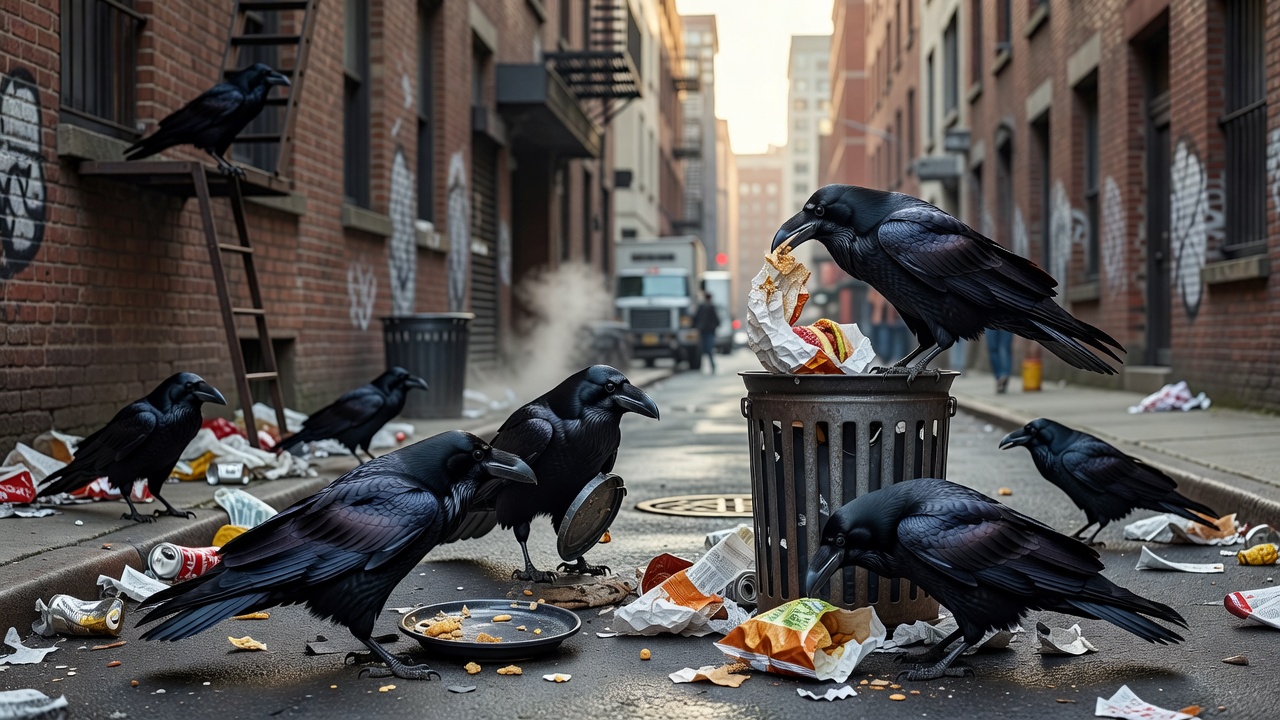
Ravens have been documented dropping nuts onto roadways at traffic lights, timing retrievals to avoid vehicles. In one city, birds learned to access discarded fast-food containers by tearing specific seams. These tactics reduce competition from other scavengers and minimize human interference. Observations indicate that juvenile ravens acquire these skills through social learning from experienced adults within their groups.
Traffic patterns and waste management systems appear to drive much of the behavioral shift. Ravens now frequent construction sites for exposed insects and rodents displaced by excavation. Such flexibility aligns with established corvid cognitive abilities, including problem-solving and causal reasoning.
Implications for Urban Ecology
Long-term studies suggest these foraging innovations may influence local biodiversity by altering seed dispersal and scavenging dynamics. City planners are beginning to incorporate corvid behavior into waste-reduction strategies. Continued monitoring will clarify whether these adaptations persist across generations or remain context-specific responses to rapid urbanization.
Overall, the data highlight ravens' capacity to thrive amid human-dominated landscapes through behavioral plasticity rather than genetic change. Further fieldwork aims to quantify success rates of these novel tactics compared with traditional methods.